Intentional Leader

  • Home
  • Podcast
  • Course
  • Newsletters
  • Articles
  • About
  • Patreon
  • Contact
Greg with glasses.jpg

#39: Greg McKeown (NYT Bestselling Author) — On Essentialism, Negotiation, and Legacy

May 28, 2020 by Cal Walters in Intentional Living, Leadership
apple-podcasts-badge.png
google_podcasts_badge@8x.png
Spotify 3.png

Greg McKeown has dedicated his career to discovering why some people and teams break through to the next level—and others don’t.

The definitive treatment of this issue is addressed in McKeown’s New York Times and Wall Street Journal bestseller, Essentialism: The Disciplined Pursuit of Less.  As well as frequently being the #1 Time Management book on Amazon, this book challenges core assumptions about achievement to get to the essence of what really drives success.

McKeown is the CEO of McKeown Inc. His clients include Adobe, Apple, Google, Facebook, Pixar, Salesforce.com, Symantec, Twitter, VMware and Yahoo!. His writing has appeared or been covered by The New York Times, Fast Company, Fortune, HuffPost, Politico, and Inc. Magazine. He is among the most popular bloggers for the Harvard Business Review and LinkedIn’s Influencers group: averaging a million views a month.

McKeown has been interviewed on numerous television and radio shows including NPR, NBC, FOX, and as a regular guest on The Steve Harvey Show. Entrepreneur voted his interview at Stanford University the #1 Must-See Video on Business, Creativity and Success.

Essentialism - book 2.jpg

As an accomplished public speaker, Greg has spoken to hundreds of audiences around the world including in Australia, Bulgaria, Canada, China, England, India, Ireland, Italy, Japan and Singapore.

Highlights include speaking at SXSW, interviewing Al Gore at the Annual Conference of the World Economic Forum in Davos Switzerland and receiving a personal invitation from Haakon, Crown Prince of Norway, to speak to his Annual Innovation Conference.

McKeown challenges conventional wisdom in a unique and engaging style from the first moment to the last instant. As the event organizer at Greater Public said after McKeown addressed their 1,000-person conference, “I have been part of this event for 16 years and McKeown is the best speaker we have ever had!”

Speaking - Greg McKeown.jpg

McKeown is an active Social Innovator. Serving as a Board Member for Washington D.C. policy group Resolve and as a mentor with 2 Seeds, a non-profit incubator for agricultural projects in Africa. He has also been a speaker at non-profit groups including The Kauffman Fellows, Net Impact and Stanford University: he recently gave back to Stanford University by co-creating a popular class called, Designing Life, Essentially.

He serves as a Young Global Leader for the World Economic Forum.  He recently moderated a session at the “Summer Davos” in China called, “Unpacking Social Innovation Models for Maximum Impact”, served as a panelist at the “Sharpening Your Creative Edge” working session at the Forum.

Prior to this, McKeown collaborated in the research and writing of Multipliers: How the Best Leaders Make Everyone Smarter and worked for Heidrick & Struggles’ Global Leadership Practice assessing senior executives.

Originally from London, England, McKeown now lives in Calabasas, California with his wife, Anna, and their four children. He did his graduate work at Stanford University.

97335514_237982624297518_6870972073565856272_n(1).jpg

Follow Greg’s important work at GregMcKeown.com or on LinkedIn, Twitter, and Instagram


On this episode, we discuss:

  • some of my journey with Essentialism,

  • part of the genesis for Greg writing Essentialism,

  • why so many of us focus on non-essential things,

  • what he calls the “success paradox,”

  • the social pressure to do more,

  • how to say “no,”

  • how to negotiate and acknowledge trade offs,

  • Greg’s perspective on The Great Reset due to COVID-19,

  • what he would change about the book, and

  • his views on legacy

Episode Transcript

Greg’s new podcast Essentialism with Greg McKeown launches in June 2020. Check it out!
97090127_106833910942776_5231777887313602973_n.jpg

Help us grow by leaving a rating or review on Apple Podcasts

Partner with us financially at Patreon

Follow us on Facebook

May 28, 2020 /Cal Walters
essentialism, priorities, discipline, legacy, impact
Intentional Living, Leadership
Comment
jon-gordon-portraits-9173.jpg

#38: Jon Gordon (Bestselling Author) — On Staying Positive, Self-Belief, and the Comparison Trap

May 24, 2020 by Cal Walters in Intentional Living, Leadership
apple-podcasts-badge.png
google_podcasts_badge@8x.png
spotify.png

Jon Gordon's best-selling books and talks have inspired readers and audiences around the world. His principles have been put to the test by numerous Fortune 500 companies, professional and college sports teams, school districts, hospitals, and non-profits. He is the author of 20 books including 8 best-sellers: The Energy Bus, The Carpenter, Training Camp, You Win in the Locker Room First, The Power of Positive Leadership, The Power of a Positive Team, The Coffee Bean and his latest Stay Positive.

Speaking - Jon Gordon.jpg

Jon and his tips have been featured on The Today Show, CNN, CNBC, The Golf Channel, Fox and Friends and in numerous magazines and newspapers. His clients include The Los Angeles Dodgers, Campbell’s Soup, Dell, Publix, Southwest Airlines, Miami Heat, The Los Angeles Rams, Snapchat, BB&T Bank, Clemson Football, Northwestern Mutual, West Point Academy and more. Jon is a graduate of Cornell University and holds a Masters in Teaching from Emory University. He and his training/consulting company are passionate about developing positive leaders, organizations and teams.

JonTodayShow.jpg
JonDabo.jpg

Jon has two new books coming out this year, The Garden and Relationship Grit. The Garden is an enlightening and encouraging spiritual fable that reveals the 5 D’s that can sabotage us and a proven plan to help us overcome and win the battle in our mind. Rooted in Jon Gordon’s faith tradition, this fable is a different kind of book than his previous business fables. However, in his familiar trademark style, he takes a complex subject and simplifies it to help people take action and improve their lives.

Everyone will struggle with fear, anxiety, or stress at some point in their lives, and everyone will have to overcome these challenges to create the life they were meant to live. Given that there are many contributing factors that influence how we think and feel, Jon wrote this book to share how the power of love, encouragement, truth, faith, and belief can be part of the solution.

The_Garden_hi-res.jpg
Relationship_Grit_hi-res.jpg

In Relationship Grit, Jon and his wife, Kathryn, reveal what brought them together, what kept them together through difficult times, and what continues to sustain their love and passion for one another to this day. They candidly share their mistakes, decisions that almost destroyed their marriage, and successes so you can learn from their experiences and make your relationship stronger.

Connect with Jon on Twitter, Facebook, LinkedIn, Instagram and Youtube.

Episode Transcript

Help us grow by leaving a rating or review on Apple Podcasts

Partner with us financially at Patreon

Follow us on Facebook

May 24, 2020 /Cal Walters
positive, self-belief, leadership, comparison
Intentional Living, Leadership
Comment
Julet+on+Couch.jpg

#37: Juliet Funt (CEO of WhiteSpace at Work) — How to Combat Overload and Overwhelm

May 13, 2020 by Cal Walters in Intentional Living, Leadership
apple-podcasts-badge.png
google_podcasts_badge@8x.png
Spotify 3.png

Do you ever feel overwhelmed and overloaded with what seems like busy work? Ever wonder whether there is a smarter, healthier, and more sustainable way to work? If so, you are going to love my guest on the podcast this week.

Juliet Funt is the CEO of WhiteSpace at Work, a training and consulting firm that helps organizations, their leaders and employees flip the norms of business in order to reclaim their creativity, productivity and engagement. With thought-provoking content and immediately actionable tools, she has become a nationally recognized expert in coping with the Age of Overload in which we all live and work.

Juliet helps professionals learn the pivotal difference between activity and productivity. She teaches them a streamlined method for personal process improvement – leading to more creativity and engagement. She helps executives, managers and teams answer the critical question “What thoughts deserve my full attention today?”

Juliet regularly wows audiences as a high-impact, high-energy speaker, including multiple speeches at the Global Leadership Summit. Yet her deeper mission is to show organizations how WhiteSpace® can change the negative patterns and behaviors that prevent them from achieving optimum results. Her clients include a number of Fortune 100 companies and span a wide array of industries, from financial services to technology, manufacturing to the military, and executive workshops to audiences as large as 7,000.

Juliet in Chair .jpg

Incredibly intuitive, Juliet successfully blends highly customized content with a keen understanding of clients’ needs in her programs and consulting work. With a unique blend of charisma, humor and tough love, she has the uncanny ability to connect with people at all levels, compelling them to make real, lasting change. Yet beneath her powerful assets, she is both authentic and accessible. As a busy corporate speaker and consultant, business owner, wife, and mother of three young boys, she practices on a daily basis the WhiteSpace® concept she shares with clients. Juliet Funt is a force for change in organizations around the world, helping them find their WhiteSpace, recharge their people and reclaim their passion for work. Juliet is a graduate of Northwestern University.


On this episode we discuss [time is from audio version]:

  • Her journey and how this concept of WhiteSpace was conceived [4:00]

    • “We have a very passionate belief that there is an element called white space that is missing from work, and white space is the time—the open, thoughtful time that used to exist in between things.”

  • Discovering the beauty of white space late at night when her children were very young [5:45]

    • “What I found was that trapped in that really dark, white space, all sorts of interesting things started happening because I couldn’t use a fix of any kind of activity to get my brain distracted. I felt feelings. I designed products. And I clarified things in my marriage, and I gave myself executive feedback.”

  • Even though people agree that busy work is a problem, why are we not making more progress in this area? [7:25]

    • “There is a worship of busyness and a fear of openness. The fear is that openness equals nothingness. The fear is that when you are not being active you are not being productive.”

    • “That all speaks to an enormous lack of trust in the value of thinking.”

  • Quantifying the negative impact of busy work on organizations [10:30]

    • “We usually see about one million dollars of annual waste for every fifty people in a group.”

    • “It exhausts people. It keeps them farther away from the meaningful work that inspires them.”

    • “Strategically, it creates enormous amounts of re-work and wasted time.”

    • “A Bloomberg article just came out that said that 45% of workers are burned out 6-8 weeks into COVID, and the work day is 3 hours longer.”

  • How to begin shifting to a more productive way of working [15:15]

    • “A mindset shift if more important than a tactical shift.”

    • “Common sense and common practice are two different things.”

    • “The most important mindset that you are going to want to start talking about is called a reductive mindset.”

    • “A reductive mindset is mathematical. This sense of removing items. Most companies and organizations have an additive sense. They just add and add and add.”

    • “Where can you cut? Where can you strip? Where can you delegate . . . postpone? Where can you consolidate? Where can you take reporting that was weekly and make it monthly? Can you take monthly and make it quarterly?”

  • Thoughts on a reductive or additive mindset in the military [20:00]

  • Distrust vs. trust of white space in leaders [22:30]

    • “What if my mind knows where it is heading? What if my mind is chewing on something, cooking something, that is eventually going to pop into a relevant business contribution?”

  • Whether white space is urgent [24:00]

    • “White space can be recuperative or constructive . . . that recuperative white space is pretty urgent.”

  • How to make emails and meetings more productive [24:30]

    • “90% of the time email is a request for action and not a request for observation.”

  • 2D vs. 3D communication and communication mediums [28:15]

During the interview, Juliet offered the opportunity for your team to take the following survey to assess how each member is doing.

White Space.png

Watch this video to learn more about the great work WhiteSpace at Work is doing:


Visit WhiteSpaceatWork.com to learn more about the great work Juliet and her team are doing.

Connect with Juliet by sending her an email at juliet@whitespaceatwork.com or follow her on LinkedIn or Twitter. Juliet tweets @whitespaceatwrk.


Help us grow by leaving a rating or review on Apple Podcasts

Partner with us financially at Patreon

Follow us on Facebook

May 13, 2020 /Cal Walters
White Space, Reductive Mindset
Intentional Living, Leadership
Comment
IMG_3530.jpg

#36: Chevy Cook (Co-Founder of Military Mentors) — On Adversity, Self-Belief, and the Power of Mentors

May 11, 2020 by Cal Walters in Intentional Living, Leadership
apple-podcasts-badge.png
google_podcasts_badge@8x.png
Spotify 3.png

I’m really excited to bring you the inspiring story of Chaveso “Chevy” Cook!

On this episode, you will hear Chevy share his powerful story of overcoming adversity as a child and finding mentors that helped him believe in himself and chart a course of achievement, purpose, and contribution. Chevy is the Co-Founder and Executive Director of Military Mentors, a registered 501(c)(3) with a mission to elevate, educate, and facilitate mentoring for the military and beyond.

Chevy graduated from West Point in 2004 with a Bachelor of Science in Psychology. He also has a M.A. in Leadership Development from the University of Texas El Paso, and an M.A. in Organizational Psychology from Columbia University. He currently lives in Boston, MA and is pursuing doctoral studies at Tufts University. He is also a visiting researcher at Harvard Kennedy School.

A long serving member of the special operations community, he started his Army career in the historic 82nd Airborne Division and has served the majority of his career at Fort Bragg, NC. He also served as both a Tactical Officer and a Department of Behavioral Sciences and Leadership instructor at West Point.

Salute.jpeg

Chevy is a member of the American Psychological Association, the Carnegie Council for Ethics in International Affairs, Team Red, White, & Blue, the Council on Foreign Relations, and an Advisory Board Member at the Positivity Project.  Chevy's work has been published in the International Mentoring Association, the Journal of the Adjutant General’s Corp Regimental Association, Armor Magazine, Journal of Character and Leadership Development, Military Review, Association of the United States Army, Infantry Journal, Joint Forces Quarterly, Small Wars Journal, Strategy Bridge, IO Sphere, White House Studies, and has a pending book under review with Texas A&M Press.

His military education includes the Command and General Staff Officer Course, Air Defense Artillery Captain’s Career and Basic Courses, PSYOP Qualification Course, Arabic Special Operations Language Training, SERE-C (High Risk), Basic and Advanced Airborne School, Air Assault School, MC-6/T-11 Jumpmaster Instructor Course, Gryphon Group Mobile Force Protection Course, Anti-Terrorism Basic Officer Course, Military Deception Planners Course, Anti-Terrorism Evasive Driver’s Course, Information Operations Capabilities and Applications Course, Contracting Officers Representative Course, Air Force Combat Airmen Skills Training/Joint Air Functional Course, and Combatives Level I.

Award Photo.png

Some of his awards and decorations include the Bronze Star Medal, Meritorious Service Medal (4th award), Joint Service Commendation Medal (2nd award), Military Outstanding Volunteer Service Medal (2nd award), German Armed Forces Proficiency Badge (Gold), German Parachutist Wings, Egyptian Parachutist Wings, Air Assault Badge, Master Parachutist Badge, the Major General Robert McClure Medal (Bronze), and the 2016 Secretary of the Army Diversity and Leadership Award.

Chevy is married to his high school sweetheart Ashley, and their beautiful daughters are London and Lola.


92 Cooks.jpg

On this episode, we discuss:

  • Chevy’s story of overcoming childhood adversity [4:40]

    • He and his brother moved houses when his father went to prison [6:00]

  • How he coped with all of the transition during his childhood [7:00]

  • The powerful relationship he has with his adoptive mother, Mama J [11:00]

    • “She is evidence to me of a higher power because she embodies what I would think an angel would be in human form.”

  • Two teachers that mentored Chevy at a pivotal moment in his life [13:00]

    • They asked Chevy where he wanted to be in 5 years.

  • How mentors helped him believe in himself in a way he never did before [16:45]

    • “I was a broken little man.”

  • The power of questions between a mentor and mentee [18:15]

    • “The answer is somewhere inside of you.”

  • The importance of follow-up, consistency, and resourcing in mentoring [19:45]

    • A crucible moment has three components: (1) assess; (2) challenge; and (3) support.

    • “The support piece is super important.”

  • How he processed his dad’s incarceration [23:00]

  • Processing anger from his childhood [28:00]

    • “These stories are not my stories.”

    • “I’ve come to believe that I’m not here to judge anybody.”

  • The biggest things he’s learned about character development during his PhD studies [32:30]

    • Nature vs. nurture in character development

  • Practical takeaways for how to develop character [35:00]

  • How the leader can reinforce character development in the culture [37:30]

    • “The leader has to become a student in organizational culture and organizational behavior.”

    • The three layers of organizational culture: artifacts, espoused values, and shared basic assumptions.

  • The leader working in the organization vs. working on the organization [41:00]

  • A discussion about his top two book recommendations [45:00]

IMG_2812.jpg

Learn more about Military Mentors at MilitaryMentors.org and by following them on LinkedIn or Facebook.

Connect with Chevy on LinkedIn or Facebook.


During this episode, Chevy recommends the following books:

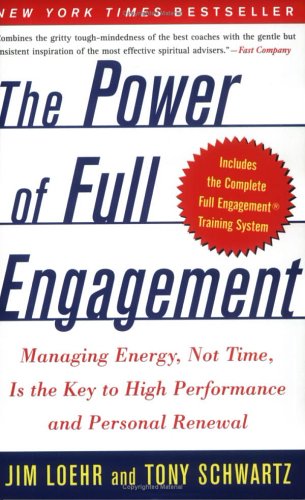
The Power of Full Engagement: Managing Energy, Not Time, Is the Key to High Performance and Personal Renewal
By Loehr, Jim, Schwartz, Tony
Expect Nothing: A Zen Guide
By Bryan, Clarice

Help us grow by leaving a rating or review on Apple Podcasts

Partner with us financially at Patreon

Follow us on Facebook

May 11, 2020 /Cal Walters
Adversity, Mentor, Self Belief, Culture
Intentional Living, Leadership
2 Comments
Ryan Hawk Headshot B&W.jpg

#35: Ryan Hawk (The Learning Leader Show) — Leadership Lessons from 350+ Interviews

April 19, 2020 by Cal Walters in Leadership
apple-podcasts-badge.png
google_podcasts_badge@8x.png
Spotify 3.png

Today, I’m really excited to bring you an interview with Ryan Hawk! Ryan Hawk is a keynote speaker, author, advisor, and the host of The Learning Leader Show, which Forbes called "the most dynamic leadership podcast out there" and Inc. Magazine recognized on its list of "5 Podcasts to Make You a Smarter Leader." Featuring interviews with hundreds of best-selling authors and world-renowned corporate, athletic, and military leaders, the show has millions of listeners in more than 150 countries.  He is the author of Welcome To Management: How To Grow From Top Performer to Excellent Leader. 

Welcome to Management has received a lot of praise, and for good reason. #1 New York Times bestselling author Daniel Pink called Welcome to Management “the ultimate all-in-one guide to becoming a great leader.” New York Times bestselling author General (Ret.) Stanley McChrystal said, “Ryan’s work provides nuanced and articulate insights into the best way to begin developing a plan to bring to light how we should lead—and it starts with reexamining ourselves.” Additionally, New York Times bestselling author Liz Wiseman said, “Ryan has uncovered the secrets of what the best leaders do and how they think.  If you are a new manager transitioning from player to coach, do yourself and your team a favor and read this book.” 

The Learning Leader Show.jpg
Book%252BPilie.jpg

As head of Brixey & Meyer's leadership advisory practice, Ryan speaks regularly at Fortune 500 companies, works with teams and players in the NFL, NBA, and NCAA, and facilitates "Leadership Circles" that offer structured guidance and collaborative feedback to new and experienced leaders.

A lifelong student of leadership, Ryan was a high school, college, and professional quarterback and captain who advanced professionally from award-winning individual contributor to VP of Sales for a multibillion-dollar company.

Ryan draws upon his experiences, empirical evidence, and expert insights to strive for continuous improvement in his own life and to inspire other leaders to achieve and sustain excellence. He is passionate about helping others to become humble servant leaders who build committed organizations, as intentionally and painlessly as possible.

CHS Speech 2.jpg

On this episode, we discuss:

  • His “why” for teaching [4:30]

    • “When you’ve been given a lot, I feel this responsibility to give a lot.”

    • “I chose to create my own form of a leadership PhD program by going directly to the professors I wanted to speak with, and those are the guests of my show, The Learning Leader Show.”

  • How it feels to have his book published [8:30]

  • For whom Welcome to Management was written [11:00]

  • The story behind the title of his book [13:00]

  • After over 350 interviews, what he says are the commonalities between those who sustain excellence over time [15:00]

    • “It is important to define excellence. I think excellence is the gradual pursuit . . . the gradual actions of getting just a bit better everyday. . . that the trajectory is going up . . . as James Clear would say, “the aggregation of marginal gains.”

    • “If there are two behaviors of people that I’ve found . . . when it comes to excellence is first they are very thoughtful individuals. They take time to reflect, to gain a true understanding of what’s real, what’s not, what is happening. . . . The second, and it stems from them being very thoughtful, is that they are intentional. . . . Once they’ve reflected, they go.”

  • His 4-part learning framework — learn, test, reflect, and teach [18:00]

  • The difference between a mentor and a coach [22:00]

  • Seeking and receiving feedback from a coach [24:30]

  • If you get feedback, do you have to take it? [28:00]

  • Leaders creating compliance vs. commitment [34:00]

  • Your “Say-Do Gap” [36:45]

  • Creating a positive culture [37:30]

    • “It’s what you do more so than what you say.”

    • “People are looking to you. . . . They are watching you more than you even realize. They are watching everything.”

  • Tips from an interview with GEN (ret.) McChrystal on leading in uncertain times and crisis [42:00]

    • Communicate relentlessly

    • Match your internal operating pace with that of your external environment.

    • Continue to reiterate what winning looks like for your organization.

  • What Ryan has learned about asking good questions from over 350 interviews on The Learning Leader Show. [45:30]

    • “I’ve learned that the best questions, the ones that really get us somewhere, are the follow up questions.”

  • Taking risks and getting started [48:00]

    • “We’re all going to be pretty average or below average the first time we do something. You just can’t worry about that. Keep striving to get better.” 

B&M - Dave Ryan Doug Live Pod.jpg

Find out more about Ryan and his work at LearningLeader.com and connect with him on LinkedIn, Instagram, Twitter, or Facebook.


Check out Ryan’s new book, which is receiving rave reviews:

Welcome to Management: How to Grow From Top Performer to Excellent Leader
By Hawk, Ryan

Help us grow by leaving a rating or review on Apple Podcasts

Partner with us financially at Patreon

Follow us on Facebook

April 19, 2020 /Cal Walters
Learning Leader, Welcome to Management, Feedback, Culture, General McChrystal, Learning Framework
Leadership
1 Comment
  • Newer
  • Older